Love Match is more inspired by history than a strictly historical novel, but I want to share some of the real stories that helped this story come together.
Behind the seams
My working title for Love Match was ‘The Seven Best Dresses of Mabel Peters’. The nod to Taylor Jenkins-Reid’s Seven Husbands of Evelyn Hugo was not a coincidence, though Mabel (AKA ‘the Bush Telegraph’), a septuagenarian with a passion for gossip, is a far cry from Evelyn’s Oscar-winning siren.
I had a vision of a collection of dresses and clothing amassed over a lifetime, that hadn’t seen the light of day for a while. A collection that would be discovered by accident, and that Sarah Childs would have to help Mabel catalogue. As they examined different pieces, they would bring up memories and stories and secrets from Mabel’s past – her deb dress, a dress she wore for the Miss Queensland Quest, a uniform from working at the racetrack in Brisbane, dresses made for her by an old friend who was an aspiring fashion designer.
It was while I was searching for images of dresses from various periods in Queensland history that I came across the story of Dulcie Mason. Dulcie loved to wear new frocks to the country hall dances in Queensland’s Darling Downs. With money scraped together from selling eggs from her farm, she would buy fabric and describe her design ideas to her dressmaker friend Thelma Beutel. When Dulcie passed away in 2017 she left behind a collection of 70 dresses, spanning the 1940s to the 1990s. Stumbling upon Dulcie and Thelma’s partnership felt like a sign I was on the right track with Mabel’s story.

The day Five Bush Weddings was launched, I visited the Royal Bull’s Head Inn in Drayton, on the outskirts of Toowoomba, where some pieces from Dulcie’s collection were on show. Sadly the collection is still in need of a permanent home.

Later I got my hands on Ann Allcock and Nicki Laws’ fantastic little book Frocks, Country Halls and Deb Balls, which helped me imagine the country dances Mabel would go to in the 60s and 70s. Even better was the 2015 Landline feature ‘The Last Dance’. It showed the history of country halls in the Darling Downs, and the few young people still making their debut on the boards. Something about the old ‘tea boys’ filling everyone’s cups from the giant aluminium teapots is just so moving. There’s even a cameo from my sister’s parents in law in the report!
Miss Queensland

Mabel gets a glimpse of life beyond her small town when she competes in the Miss Queensland Quest in Brisbane. This was the state chapter of the Miss Australia Quest, which ran from 1926 to 1991 and in the 1950s became the major fundraiser for the Australian Cerebral Palsy Association. I took some liberties with the structure and judging of the pageant Mabel attends, but the women who won the Quest were big celebrities of their time. Miss Australia would receive a big international trip, do loads of media and they were recognised across the country.

In my research I was excited to see original sashes and crowns/tiaras from 1955 in the collection at the State Library of Queensland. I also interviewed a friend’s mum who had competed in the Miss Queensland Quest in the 1970s, and she still has the incredible crocheted jumpsuit she wore.
A day at the races
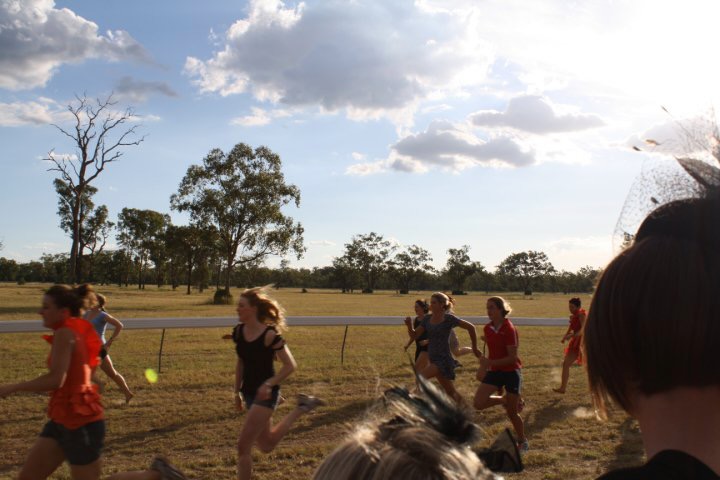
There’s a country race meet in Love Match at Bundelah, a thinly veiled fictionalisation of the Flinton Races held on Easter Saturday each year, just off the Moonie Highway between Moonie/Westmar and St George. I have so many fond memories from Flinton Races, where there’s always bookies camped out in the shade, a hotly contested Fashions of the Field, volunteer-run bar and BBQ and plenty of pants dropped to Eagle Rock on the late night dancefloor. But my favourite part is always the foot race held at the end of the day, after the horses have cleared out off the track.
I needed a job young Mabel could feasibly have in Brisbane in the 1960s and I really wanted her to be a bookies’ clerk, but when I did some asking around, women didn’t hold those roles until later. Where women did work at that time was in the Tote – the Totalisator, an early computer the size of a bus that automatically calculated odds on the races.
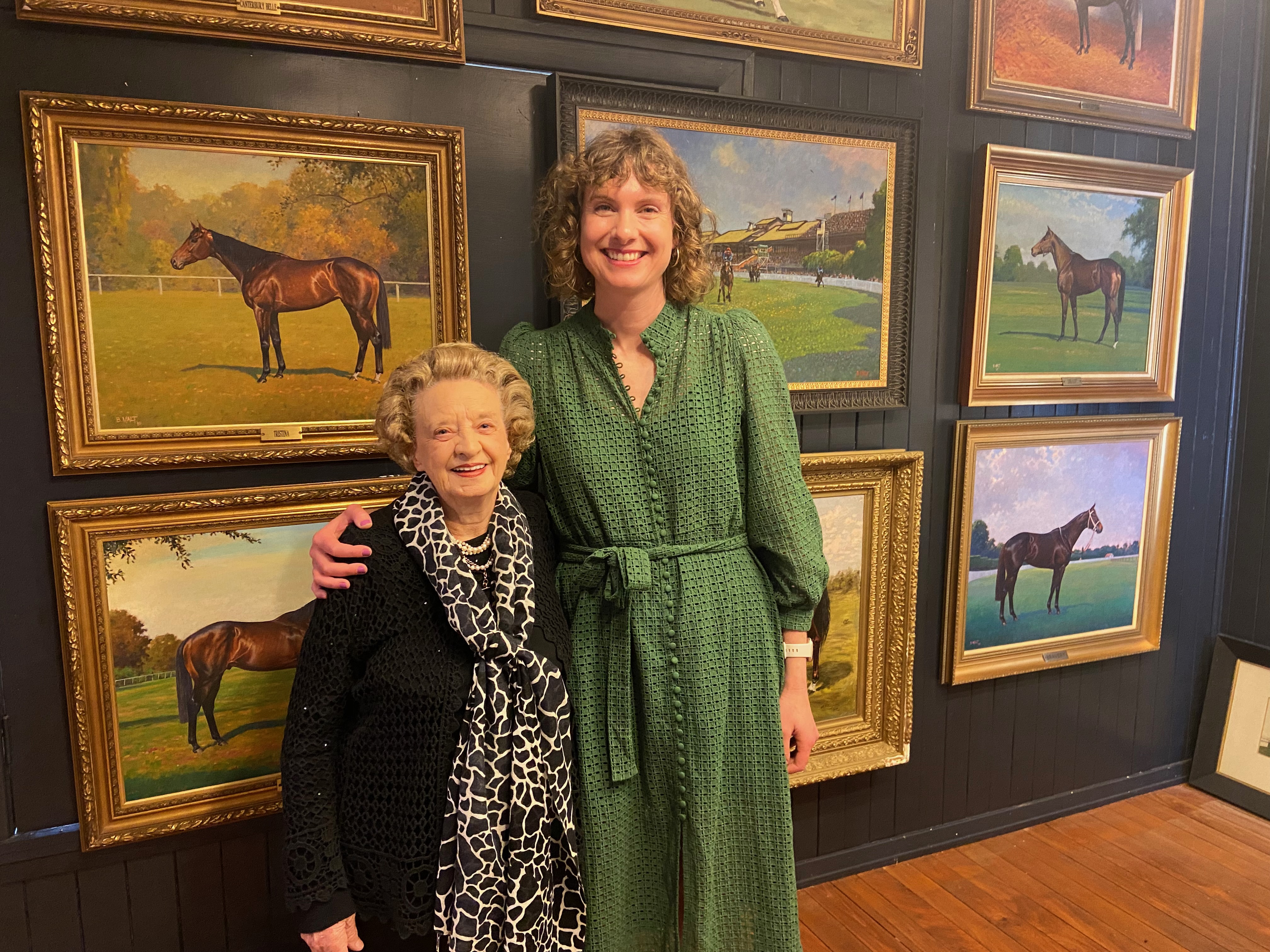
I was delighted to learn that I could visit the Old Tote at Brisbane’s Eagle Farm racetrack. Even better, I got to spend a day touring the museum there with Maureen Collier, a fabulous woman who was there in the thick of things as a trainer in the exact era Mabel was. Maureen’s passion for horses and racing was palpable and infectious, and as we toured the museum she was constantly spotting old friends in the photographs. You know that famous photo of Jean Shrimpton in her scandalous mini and bare legs at the Melbourne Cup? There’s a woman in the background in amazing glasses and a hat. It’s Maureen.

A ball fit for a queen
Love Match also references Queens Ball, which was first held in the early 1960s and took its name from the Queens Birthday long weekend when it was held. This queer event has an amazing history and legacy: ‘The longest-running continuous LGBTIQ+ event began as a house party on Mount Tamborine in 1962.’ Again, my timeline isn’t quite accurate – at the time Mabel was living in Brisbane the ball was only a small gathering, but from the start it featured a hotly contested fancy dress competition (with gold-painted kewpie dolls for the winners) that endured as the ball grew into bigger and bigger venues in later years.
 Clare Fletcher